

Compression Testing Machine
Jinan Kason: Leading Professional Charpy Impact Testing Machine Manufacturer and Supplier in China
We have specialized in developing and manufacturing metal, non-metal and composite material testing equipment for many years and have served customers from more than 150 countries and regions. As a professional testing equipment factory, our advantages are specifically reflected in
Complete Production Facilities
Our company has production and office facilities such as scientific research office building, electrical installation and commissioning building, final assembly workshop, heavy machine workshop, machining workshop, blanking workshop, painting workshop, measuring room, product showroom, etc.
Diverse Product Types
Our main products include hydraulic universal testing machines, electronic universal testing machines, compression testing machines, spring testing machines, impact testing machines, torsion testing machines, hardness testers, and testing machine accessories.
Rich Service Experience
Our products are exported to international markets such as Germany, the United States, Spain, Australia, Italy, South Africa, South Korea, Pakistan, Malaysia, Thailand, and Singapore. We have a professional pre-sale, sales and after-sales service team to provide strong technical support and professional services to domestic and foreign users.
Professional Qualification Certification
Our company has successfully passed ISO9001 quality system, ISO14000 environmental management system, occupational health and safety management system, and CE certification. The company has obtained a total of 22 authorized national patents, including 2 national invention patents, 13 national utility model patents, and 7 national design patents.
-
![Brick Compressive Strength Tester]() Brick Compressive Strength TesterThis machine adopt computer auto control, with constant test speed, constant stress, test force keeping and other control mode. The computer realize test data and test curve’display, save,manage...read more
Brick Compressive Strength TesterThis machine adopt computer auto control, with constant test speed, constant stress, test force keeping and other control mode. The computer realize test data and test curve’display, save,manage...read more -
![500T Computer Control Compression Testing Machine]() 500T Computer Control Compression Testing MachineThis series compression testing machine is mainly designed for compression test of building material items, such as concrete cube, concrete blocks, cement specimen, and bricks etc, also used for...read more
500T Computer Control Compression Testing MachineThis series compression testing machine is mainly designed for compression test of building material items, such as concrete cube, concrete blocks, cement specimen, and bricks etc, also used for...read more -
![Computer Controlled Elastomeric Bearing Testing Machine]() Computer Controlled Elastomeric Bearing Testing MachineMicrocomputer control multi -functional electric hydraulic servo pressure testing machine adopts an oil cylinder down type and four -filaments structure host. The test space is unseenable. The...read more
Computer Controlled Elastomeric Bearing Testing MachineMicrocomputer control multi -functional electric hydraulic servo pressure testing machine adopts an oil cylinder down type and four -filaments structure host. The test space is unseenable. The...read more -
![Yes-2000 Digital Display Compression Testing Machine]() Yes-2000 Digital Display Compression Testing MachineThis compression testing machine mainly used for concrete rupture strength testing, cement, plastic sand, and red brick building materials compression resist testing. Widely used in metallurgy,...read more
Yes-2000 Digital Display Compression Testing MachineThis compression testing machine mainly used for concrete rupture strength testing, cement, plastic sand, and red brick building materials compression resist testing. Widely used in metallurgy,...read more -
![Yes-2000d Digital Display Hydraulic Power Compression Testing Machine]() Yes-2000d Digital Display Hydraulic Power Compression Tes...Digital display compression testing machine mainly used for concrete and other material compression resist testing. Widely used in metallurgy, building materials, space flight and aviation,...read more
Yes-2000d Digital Display Hydraulic Power Compression Tes...Digital display compression testing machine mainly used for concrete and other material compression resist testing. Widely used in metallurgy, building materials, space flight and aviation,...read more -
![Automatic Concrete Compression Testing Machine]() Automatic Concrete Compression Testing MachineThis machine is an important instrument for testing the physical properties, structural properties and internal and external defects of various concrete materials and their products.read more
Automatic Concrete Compression Testing MachineThis machine is an important instrument for testing the physical properties, structural properties and internal and external defects of various concrete materials and their products.read more -
![Concrete Compressive Strength Testing Machine]() Concrete Compressive Strength Testing MachineThis machine adopt computer auto control, with constant test speed, constant stress, test force keeping and other control mode. The computer realize test data and test curve’display, save,manage...read more
Concrete Compressive Strength Testing MachineThis machine adopt computer auto control, with constant test speed, constant stress, test force keeping and other control mode. The computer realize test data and test curve’display, save,manage...read more -
![Concrete Compression Machine]() Concrete Compression MachineThis compression testing machine mainly used for brick, cement, concrete and other material compressive strength testing. Widely used in metallurgy, building materials, space flight and aviation,...read more
Concrete Compression MachineThis compression testing machine mainly used for brick, cement, concrete and other material compressive strength testing. Widely used in metallurgy, building materials, space flight and aviation,...read more -
![Manual Compression Testing Machine]() Manual Compression Testing MachineDigital display compression testing machine mainly used for brick, cement, concrete construction material and other material compression resist testing.read more
Manual Compression Testing MachineDigital display compression testing machine mainly used for brick, cement, concrete construction material and other material compression resist testing.read more -
![Compressive Strength Of Concrete Machine]() Compressive Strength Of Concrete MachineYAW-D Series Compression Testing Machine mainly used for concrete rupture strength testing, cement, plastic sand, and red brick building materials compression resist testing. Widely used in...read more
Compressive Strength Of Concrete MachineYAW-D Series Compression Testing Machine mainly used for concrete rupture strength testing, cement, plastic sand, and red brick building materials compression resist testing. Widely used in...read more -
![Concrete Cube Compression Testing Machine]() Concrete Cube Compression Testing MachineDigital display compression testing machine mainly used for concrete rupture strength testing, cement, plastic sand, and red brick building materials compression resist testing. Widely used in...read more
Concrete Cube Compression Testing MachineDigital display compression testing machine mainly used for concrete rupture strength testing, cement, plastic sand, and red brick building materials compression resist testing. Widely used in...read more -
![Four-Column Carton Compression Tester]() Four-Column Carton Compression TesterCarton compression tester is the essential testing equipment to test the compressive strength of carton box. Adopted high precise sensor,ARM chip, with powerful data processing function, test...read more
Four-Column Carton Compression TesterCarton compression tester is the essential testing equipment to test the compressive strength of carton box. Adopted high precise sensor,ARM chip, with powerful data processing function, test...read more


Brief Introduction to Compression Testing Machines
Compression testing machines are available in a variety of different sizes and force capacities ranging from 0.02 N to 2,000 KN. Most low force testing is performed on an electromechanical single-column or dual-column tabletop machine, while higher force applications require floor model frames. They can perform a wide range of different test types, including tensile, compression, bend, peel, tear, shear, friction, torsion, puncture, and more. These machines are designed for even higher capacity testing of high strength metals, alloys, and advanced composites.
Main Parts of Compression Testing Machines

Load Frame
The load frame is the main structure that the machine supports and applies load to the specimen during testing. It is designed to withstand the high forces generated during testing and is usually made of high-strength metal such as steel.

Actuator
An actuator is the mechanism that generates the force applied to the specimen during testing. Depending on the type of machine, the actuator can be hydraulic or servo-electric.

Load Cell
A load cell is a sensor that measures the force applied to a sample. It converts force into electrical signals, which are then displayed on the machine's control panel. Load cells are calibrated to provide accurate and reliable force measurements.

Crosshead
It is the part that holds the load cell and upper clamp assembly. It is connected to an actuator and moves up and down to apply and release loads on the sample.

Upper and Lower Clamp Assemblies
The clamp assemblies are used to hold the sample in place during testing. The upper clamp assembly is connected to the crosshead, while the lower clamp assembly is connected to the load frame. The clamp assembly is designed to hold the sample securely without causing any damage or deformation.

Control Panel
The control panel is the interface for the operator to set and control test parameters. It typically includes a digital display of the force applied, as well as controls for setting test parameters such as test speed, load limits, and other test settings.
Advantages of Compression Testing Machines
These compression testing machines can provide you with key data on the mechanical properties of your materials, such as compressive strength, yield strength, and elastic modulus. This information is critical to understanding how materials behave under compressive loading.
Our compression testing machines play a vital role in the quality control process by determining whether a material meets specified compressive strength requirements. It helps ensure that products are manufactured to the necessary standards, thereby maintaining product integrity and customer satisfaction.
These compression testing machines allow direct comparison of different materials. By testing various materials under the same conditions, engineers can determine which material is best for a specific application.
These compression testing machines can be used to verify that a material or component is suitable for its intended application. For example, in the design of new products, compression testing can confirm that the selected materials can withstand the expected loads.
Data obtained from these compression testing machines can be used to predict how materials will behave under compressive loading in real-world applications. This predictive capability is critical to ensuring the safety and durability of structures and products.
Many industries have regulations that require materials to meet certain compressive strength standards. These compression testing machines verify compliance with these regulations, helping companies avoid legal issues and safeguard their reputation.
Compared to some other types of mechanical testing equipment, these compression testing machines are relatively cost effective. They are not that complex, and test samples can often be simple shapes such as cylinders or cubes.
Compression Testing Machines Parameters (Take Concrete Compressive Strength Testing Machine as an Example)
| Model | YAW-300G | YAW-300D |
| Max compression test force(KN) | 300kN | 300kN |
| Max bending test force(KN) | 10 | / |
| Test Accuracy | CLASS 1 (ISO 7500-1) | |
| Test measurement range | 2%-100%FS | |
| Control way | Computer control auto loading progress | |
| Constant loading speed | 0.1KN/S~10KN/S | |
| Test space adjustment method | Block adjustment test space | |
| Speed | 0.01-50mm/min | |
| Max compression space | 200mm | |
| Upper and lower compression plates size | Φ280 | |
| Size | 570*410*1340mm | |
| Power supply | 220V, 50HZ, 1.5 KW | |
Types of Compression Testing Machine
There are two main types of compression testing machines: hydraulic and servo-electric.

Hydraulic Compression Testing Machine
Hydraulic compression testing machines are the more traditional and commonly used type. They use hydraulic fluid to generate the force required for compression testing. Hydraulic oil is pushed through a pump, which then powers a piston on the machine, applying force to the sample. These machines are capable of generating very high forces and are ideal for heavy-duty testing applications.
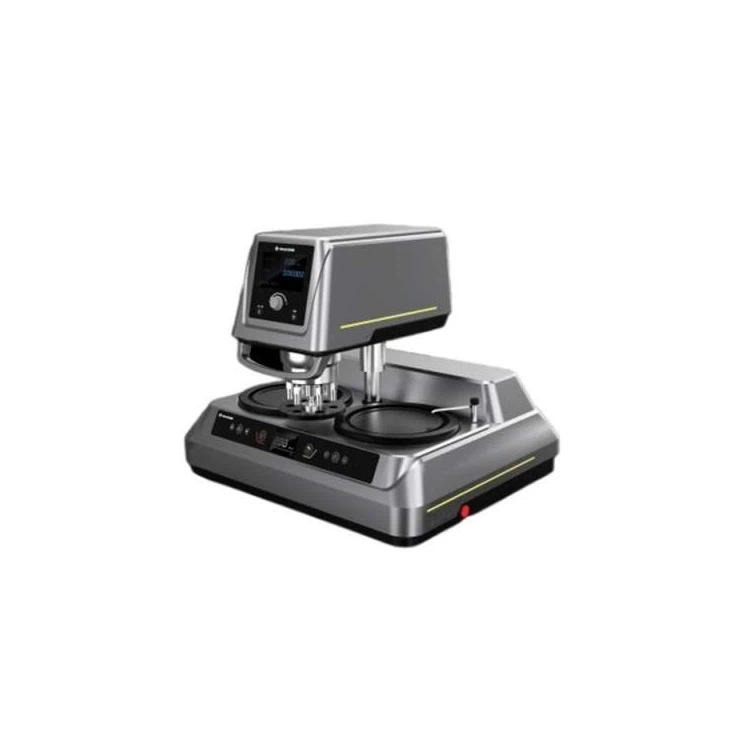
Servo Electric Compression Testing Machine
Servo electric compression testing machines are a newer, more advanced type of machine. They use electric motors to generate the force required for testing, and their force application is more precise and accurate than hydraulic machines. Servo motors are also more energy efficient than hydraulic motors, making them more sustainable. These machines are typically used for testing materials that require more precise and subtle application of force.
What Standards are Used When Performing Compression Testing Machines?
Compression testing machine checks the safety, durability and integrity of various materials and components. The most common ISO and ASTM standards used for compression testing are as follows.
Standard Compression Test for Flexible Foam Materials - Compression Properties/Compressive Stress Strain Characteristics of Flexible Foam Materials.
Compression test of rigid foam plastics.
Standard Test Method for Compression Properties of Rigid Plastics and Continuous Fiber Reinforced Composites (End Loaded Compression).
Standard Test Method for Slow Penetration Resistance of Flexible Barrier Films and Laminates.
Plunger sliding force for disposable sterile hypodermic syringes.
Standard Guide for Radial Loading of Balloon-Expandable and Self-Expanding Vascular Stents.
Boeing BSS 7260c for CAI testing and Airbus AITM 1-0010 Issue 3, etc. (these standards are also commonly used in the aerospace industry for compression testing).
Maintenance and Calibration of Compression Testing Machines
Follow The Guidelines Provided By The Manufacturer
Follow the maintenance and calibration procedure guidelines given to you by the manufacturer. These procedures may include routine inspection, lubrication, and cleaning of machine components.
Regular Inspection
Regularly inspect machine components for signs of wear, damage, or misalignment. These include load cells, actuators, gripper assemblies and frames. Any problems should be addressed immediately to prevent further damage to the machine or inaccurate test results.
Lubrication
Machine parts should be lubricated according to the manufacturer's guidelines. Over-lubrication can lead to contamination and inaccurate test results, while under-lubrication can cause excessive wear on machine components.
Cleaning
The machine should be cleaned regularly to prevent contamination and ensure accurate test results. The clamp assembly should be cleaned after each test to remove any debris or residue.
Calibration
The machine should be calibrated regularly to ensure that the test results are accurate and reliable. Calibration frequency depends on machine usage and industry standards for the intended application. Calibration should be performed by qualified technicians using certified calibration equipment.
Record Keeping
Keep detailed records of machine maintenance and calibration procedures. These records can be used to identify potential problems, monitor machine performance over time, and demonstrate compliance with industry standards.
Our Certifications
Our company has obtained the following certificates

Factory Pictures
Below are photos of our factory for you to view


Ultimate Guide
Q: How is a compression testing machine used?
Q: What is compression testing?
Q: Why is compression testing important?
Q: What are the applications for compression testing machines?
Q: What materials can be compression tested?
Q: What is the maximum load capacity of a compression testing machine?
Q: What is the accuracy of a compression testing machine?
Q: What are the safety precautions when using a compression testing machine?
Q: What are the ASTM and ISO standards for compression testing machines?
Q: What is the difference between compressive strength and tensile strength?
Q: What is the procedure for using the compression test machine?
Q: What is the purpose of a compression testing machine?
Q: What is the working principle of compression tester?
Q: What are the types of failure in compression test?
Q: What is the difference between compression test and compressive test?
Q: What is the difference between tensile tester and compression tester?
We're well-known as one of the leading compression testing machine manufacturers in China. Please rest assured to buy high quality compression testing machine for sale here from our factory. For price consultation, contact us.
Metallographic Machine, Manual Metallographic Specimen Cutting Machine, WDS Digital Display Universal Testing Machine