

Hey there! As a supplier of Universal Hardness Testers, I've been getting a lot of questions lately about the resolution of these nifty machines. So, I thought I'd take a few minutes to break it down and give you the lowdown on what resolution means for a Universal Hardness Tester.
What is Resolution Anyway?
Let's start with the basics. Resolution, in the context of a Universal Hardness Tester, refers to the smallest change in hardness that the tester can detect and display. It's like the "zoom" on a microscope. The higher the resolution, the more detailed the information you can get about the hardness of a material.
Think of it this way: if you're trying to measure the height of a stack of books, a ruler with markings every inch might tell you the stack is about 12 inches tall. But a ruler with markings every 1/16 of an inch can give you a much more precise measurement, like 12 3/16 inches. That's the difference that resolution makes.
Why Does Resolution Matter?
Resolution is super important when it comes to accurately assessing the hardness of materials. In industries like manufacturing, aerospace, and automotive, even the slightest variation in hardness can have a big impact on the performance and safety of a product.
For example, let's say you're making engine parts. If the hardness of a critical component is off by just a little bit, it could lead to premature wear, reduced efficiency, or even catastrophic failure. A Universal Hardness Tester with high resolution can help you catch these tiny differences and ensure that your parts meet the strict quality standards required in these industries.
Factors Affecting Resolution
There are a few factors that can affect the resolution of a Universal Hardness Tester. One of the biggest factors is the type of load application system. There are two main types: weight load and electric load.
- Weight Load Systems: These testers use a series of weights to apply a specific load to the test material. They're often more traditional and can be very accurate, but their resolution might be limited by the size and precision of the weights. For a great example of a weight load tester, check out our Weight Load Touch Screen Universal Hardness Tester. It's a reliable option that offers good resolution for a wide range of applications.
- Electric Load Systems: These testers use an electric motor to apply the load. They can offer higher resolution because the load can be controlled more precisely. An example of this is our Electric Load Touch Screen Universal Hardness Tester. With advanced electronics, it can detect even the smallest changes in hardness.
Another factor is the type of indenter used. Different indenters, such as a Vickers, Brinell, or Rockwell indenter, can have different levels of sensitivity and thus affect the overall resolution of the tester.
Our High-Resolution Testers
At our company, we're all about providing high-quality Universal Hardness Testers with excellent resolution. Take our HTBRV - 250 G Electric Universal Hardness Tester. This bad boy is a top - notch machine that combines the latest technology with precision engineering.
It has a state - of - the - art electric load system that allows for extremely accurate load application. This, in turn, gives it a very high resolution, so you can get detailed and reliable hardness measurements every time. Whether you're testing small, delicate components or large, heavy - duty materials, the HTBRV - 250 G can handle it all.
How to Choose the Right Resolution
When choosing a Universal Hardness Tester, you need to think about the type of materials you'll be testing and the level of accuracy you require. If you're dealing with materials that have very consistent hardness and you only need a general idea of their hardness, a tester with a lower resolution might be sufficient.
But if you're working with materials where even the slightest variation in hardness can be critical, like in high - tech industries or research labs, you'll want to invest in a tester with a higher resolution.
It's also a good idea to consider your budget. Testers with higher resolution often come with a higher price tag, so you need to find a balance between the features you need and what you can afford.
Importance of Calibration
No matter how high the resolution of your Universal Hardness Tester is, it won't give you accurate results if it's not properly calibrated. Calibration is the process of adjusting the tester to ensure that it's measuring hardness correctly.
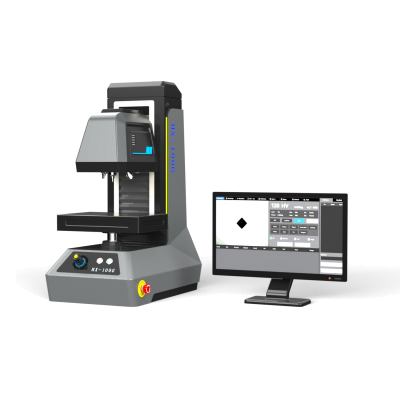

We recommend calibrating your tester regularly, especially if it's used frequently or in harsh environments. This will help maintain its accuracy and ensure that the high resolution you're paying for actually translates into reliable hardness measurements.
Final Thoughts and Call to Action
Understanding the resolution of a Universal Hardness Tester is crucial for anyone in industries that rely on accurate hardness testing. Whether you're a small - scale manufacturer or a large research institution, having the right tester with the appropriate resolution can make a big difference in the quality of your products and the accuracy of your research.
If you're in the market for a Universal Hardness Tester, we're here to help. We have a wide range of testers to suit different needs and budgets, all with excellent resolution. Don't hesitate to reach out to us for more information or to discuss your specific requirements. We'd love to work with you to find the perfect hardness tester for your business.
References
- Fundamentals of Materials Science and Engineering, Callister and Rethwisch
- Handbook of Hardness Testing, Leverant