

Universal hardness testers are indispensable tools in materials science, engineering, and manufacturing industries. They are used to measure the hardness of a wide range of materials, from metals and plastics to ceramics, to ensure quality control and compliance with industry standards. A frequently asked question regarding these machines is about the maximum sample thickness they can handle. In this blog post, we'll delve into this topic while considering our role as a provider of high - quality universal hardness testers.
Understanding the Role of Sample Thickness in Universal Hardness Testing
The thickness of a sample is a critical factor in universal hardness testing. During a hardness test, a load is applied to the sample using an indenter, creating an indentation. The size of this indentation is then measured to determine the hardness of the material. If the sample is too thin, the underlying support may influence the indentation process, leading to inaccurate hardness readings. For instance, if the sample does not have enough thickness, the indenter may penetrate through to the support surface, or the deformation may be affected by the stiffness of the support.
Factors Influencing the Maximum Sample Thickness
Indenter Geometry
Different types of indenters, such as Vickers, Brinell, and Rockwell indenters, have unique geometries. The Vickers indenter is a square - based pyramid, while the Brinell indenter is a spherical ball. The geometry of the indenter affects the distribution of the applied load during testing. A spherical indenter, like the Brinell one, spreads the load over a larger area compared to a Vickers indenter. As a result, a thicker sample may be required to accommodate the deformation caused by a Brinell test compared to a Vickers test.
Applied Load
The magnitude of the applied load is another crucial factor. Higher loads create deeper indentations. For a large - load test, the sample needs to have sufficient thickness to prevent the indenter from reaching the support. For example, if we are using a high - load setting to test the hardness of a thick metal plate, the sample should be thick enough to ensure that the deformation is confined within the sample, and the underlying support does not interfere with the test results.
Material Characteristics
The mechanical properties of the material, such as its elasticity, plasticity, and yield strength, also play a role in determining the maximum sample thickness. Materials with high plasticity may require greater thickness to handle deformation. For instance, soft metals like aluminum or copper deform more easily compared to harder alloys. So, when testing these soft metals, a thicker sample may be needed to avoid the impact of the support on the indentation.
Maximum Sample Thickness of Our Universal Hardness Testers
As a leading supplier of universal hardness testers, we offer a variety of models to meet different testing requirements. Let's take a look at some of our popular testers and their capabilities regarding sample thickness.
The HTBRV - 250 G Electric Universal Hardness Tester is a multi - functional machine capable of performing Vickers, Brinell, and Rockwell hardness tests. This tester can handle relatively thick samples. Thanks to its precise load - application mechanism and advanced indenter system, it can accurately measure the hardness of samples up to 150 mm in thickness. Its high - precision sensors ensure that even for thick samples, reliable and repeatable test results are obtained.

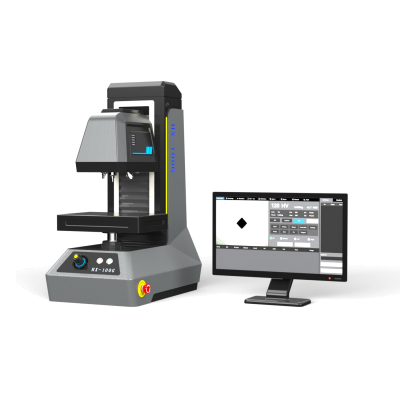
Our Weight Load Touch Screen Universal Hardness Tester is designed for modern testing environments. It offers touch - screen operation for easy control and data management. This model is suitable for samples with a maximum thickness of around 120 mm. The weight - load system provides stable and accurate loading, making it ideal for various materials testing within this thickness range.
The Electric Dial Display Universal Hardness Tester is a classic yet reliable option. With a simple and intuitive dial display, it is easy to use for both novice and experienced operators. This tester can accommodate samples with a maximum thickness of 100 mm. The electric drive system ensures smooth and consistent load application, which is crucial for accurate hardness testing.
Importance of Choosing the Right Sample Thickness
Selecting the appropriate sample thickness is essential for obtaining accurate hardness test results. Incorrect sample thickness can lead to overestimation or underestimation of the hardness values. For manufacturers, inaccurate hardness data can result in defective products, which may lead to product recalls, customer dissatisfaction, and financial losses.
In research and development, accurate hardness measurements are crucial for understanding the properties of new materials. If the sample thickness is not properly considered, the research findings may be unreliable, leading to wasted time and resources.
How to Determine the Suitable Sample Thickness for Your Test
Before conducting a hardness test, it is important to determine the appropriate sample thickness. First, refer to the relevant industry standards and testing methods. These standards often provide guidelines on the minimum and maximum sample thickness for different types of hardness tests.
Next, consider the material properties and the expected hardness range. If the material is known to be very hard, a thicker sample may be required to ensure that the indenter does not penetrate through the sample. On the other hand, for softer materials, a thinner sample may be sufficient as long as it meets the minimum thickness requirements to avoid support interference.
It is also advisable to consult with our technical support team. As a professional universal hardness tester supplier, we have extensive experience in materials testing and can provide expert advice on choosing the right sample thickness for your specific testing needs.
Conclusion and Call - to - Action
In summary, the maximum sample thickness that a universal hardness tester can handle depends on multiple factors, including indenter geometry, applied load, and material characteristics. Our company offers a range of high - quality universal hardness testers with different capabilities in terms of sample thickness. Whether you need to test thin or thick samples, we have the appropriate tester to meet your requirements.
If you are involved in materials testing and are looking for a reliable universal hardness tester, don't hesitate to contact us. Our team of experts is ready to provide you with detailed product information, technical support, and pricing details. Let us help you select the best hardness tester for your specific application and ensure accurate and consistent hardness testing results.
References
- ASTM International. (Year). Standard Test Methods for Hardness Testing.
- ISO Standards. (Year). International Standards for Hardness Testing of Materials.
- Materials Science and Engineering textbooks, various editions.