

The Brinell hardness test is a widely used method for determining the hardness of materials. It involves pressing a hard indenter into the surface of a sample under a specific load and measuring the diameter of the resulting indentation. The hardness value is then calculated based on the load and the indentation diameter. One important factor that can affect the accuracy and reliability of the Brinell hardness test is the wear of the indenter. In this blog, we will explore the effect of sample hardness on the indenter wear in a Brinell hardness tester.
Understanding Indenter Wear in Brinell Hardness Testing
Indenter wear is a common issue in Brinell hardness testing, and it can have a significant impact on the test results. As the indenter is pressed into the sample, it experiences friction and deformation, which can cause it to wear over time. This wear can lead to changes in the shape and size of the indenter, which in turn can affect the accuracy of the hardness measurement.
There are several factors that can contribute to indenter wear, including the hardness of the sample, the load applied during the test, the number of indentations made, and the material properties of the indenter itself. In this blog, we will focus specifically on the effect of sample hardness on indenter wear.
The Relationship between Sample Hardness and Indenter Wear
The hardness of the sample is one of the most important factors that can affect indenter wear in a Brinell hardness tester. Generally speaking, harder samples tend to cause more wear on the indenter than softer samples. This is because harder samples require a higher load to be applied during the test, which can increase the friction and deformation experienced by the indenter.
When a hard sample is tested, the indenter is subjected to a greater amount of stress and strain, which can cause it to wear more quickly. This wear can manifest in several ways, including changes in the shape and size of the indenter, as well as the formation of cracks or other damage on the indenter surface. Over time, this wear can lead to a decrease in the accuracy and reliability of the hardness measurement.
On the other hand, softer samples tend to cause less wear on the indenter. This is because they require a lower load to be applied during the test, which reduces the friction and deformation experienced by the indenter. As a result, the indenter is less likely to wear or become damaged, and the hardness measurement is more likely to be accurate and reliable.
Implications for Brinell Hardness Testing
The relationship between sample hardness and indenter wear has several important implications for Brinell hardness testing. First, it is important to choose the appropriate indenter for the hardness of the sample being tested. For harder samples, a more durable indenter material may be required to minimize wear and ensure accurate results. Conversely, for softer samples, a less durable indenter material may be sufficient.

Second, it is important to monitor the wear of the indenter over time and replace it when necessary. This can help to ensure that the hardness measurements remain accurate and reliable. Regular calibration of the Brinell hardness tester is also important to ensure that the indenter is functioning properly and that the test results are consistent.
Finally, it is important to consider the cost and availability of the indenter when choosing a Brinell hardness tester. Some indenter materials may be more expensive or difficult to obtain than others, which can affect the overall cost and efficiency of the testing process.
Our Brinell Hardness Testers
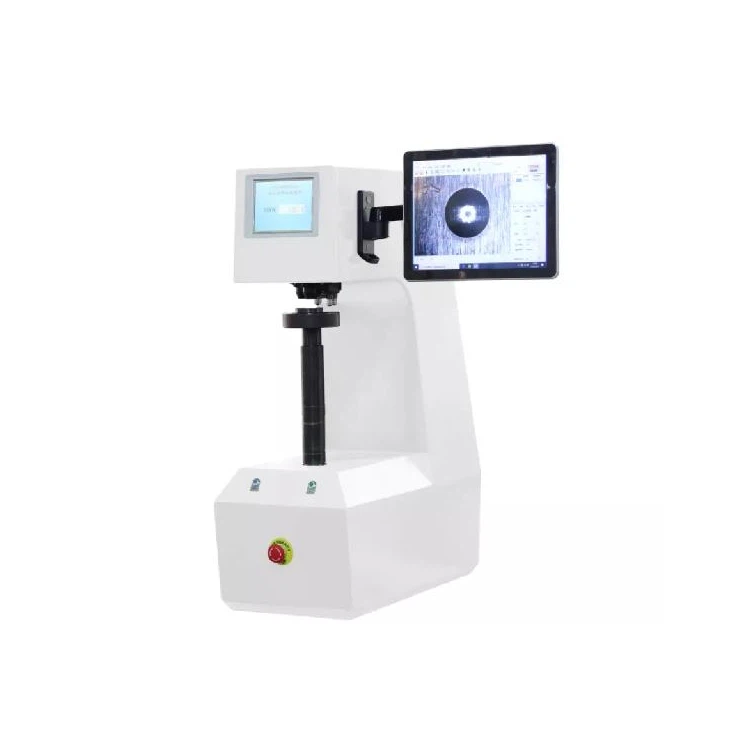
As a leading Brinell hardness tester supplier, we offer a range of high-quality Brinell hardness testers that are designed to provide accurate and reliable hardness measurements. Our testers are available in a variety of configurations, including touch screen Brinell hardness testers and automatic Brinell hardness testers, to meet the needs of different applications.
Our Brinell hardness testers are equipped with high-quality indenters that are designed to minimize wear and provide accurate results. We offer a range of indenter materials, including tungsten carbide and steel, to ensure that you can choose the appropriate indenter for the hardness of the sample being tested.
In addition to our high-quality Brinell hardness testers, we also offer a range of accessories and services to support your testing needs. Our team of experienced technicians can provide training and support to help you get the most out of your Brinell hardness tester, and we offer a range of replacement parts and indenter materials to ensure that your tester is always in top working condition.
Conclusion
In conclusion, the hardness of the sample is an important factor that can affect the wear of the indenter in a Brinell hardness tester. Harder samples tend to cause more wear on the indenter than softer samples, which can have a significant impact on the accuracy and reliability of the hardness measurement. By choosing the appropriate indenter for the hardness of the sample being tested, monitoring the wear of the indenter over time, and regularly calibrating the Brinell hardness tester, you can ensure that your hardness measurements are accurate and reliable.
If you are in the market for a Brinell hardness tester, we encourage you to contact us to learn more about our products and services. Our team of experts can help you choose the right Brinell hardness tester for your needs and provide you with the support and training you need to get the most out of your investment.
References
- ASTM E10 - Standard Test Method for Brinell Hardness of Metallic Materials.
- ISO 6506 - Metallic materials -- Brinell hardness test.
- Callister, W. D., & Rethwisch, D. G. (2011). Materials science and engineering: an introduction. John Wiley & Sons.