

Can a Brinell Hardness Tester be used for testing forgings?
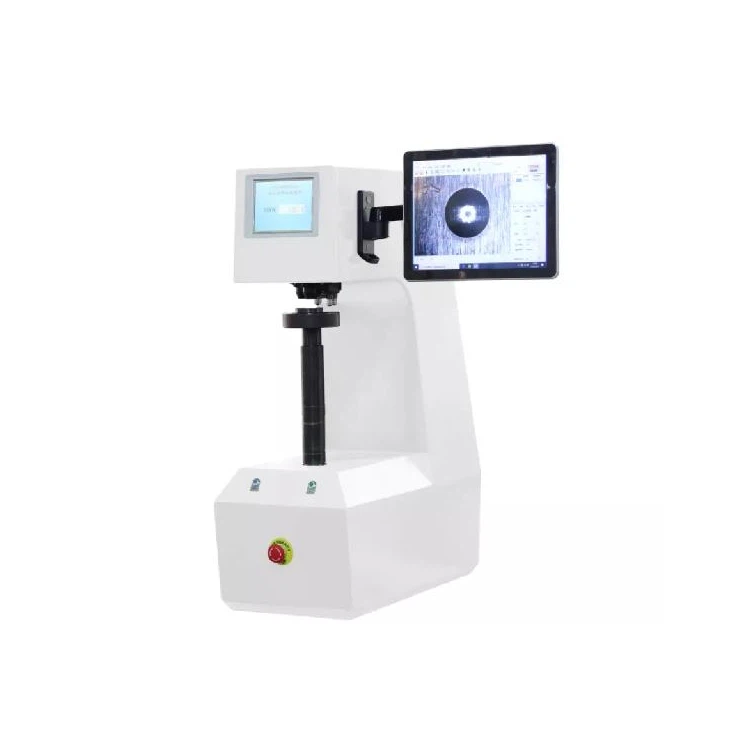

Hey there! As a supplier of Brinell Hardness Testers, I often get asked if our testers can be used for testing forgings. Well, let's dive right into this topic and figure it out.
First things first, let's understand what forgings are. Forgings are metal pieces that are shaped by applying compressive forces, usually by hammering or pressing. They're known for their strength and durability, and are used in a wide range of industries, from automotive to aerospace. Since forgings play such a crucial role in these industries, it's important to ensure their quality, and that's where hardness testing comes in.
The Brinell hardness test is one of the oldest and most straightforward methods for determining the hardness of a material. It works by pressing a hard, spherical indenter (usually made of hardened steel or tungsten carbide) into the surface of the test piece under a specific load for a set period. Once the load is removed, the diameter of the indentation left on the surface is measured. The Brinell hardness number (BHN) is then calculated based on the load applied and the surface area of the indentation.
Now, can a Brinell Hardness Tester be used to test forgings? The short answer is yes, it definitely can! There are several reasons why the Brinell test is a great fit for forgings.
One of the main advantages of using a Brinell Hardness Tester for forgings is its ability to measure the hardness of large - grained and rough - surfaced materials effectively. Forgings often have a coarse grain structure, and their surfaces can be a bit rough due to the forging process. The Brinell test, with its relatively large indenter, can average out the effects of the grain structure and surface irregularities. This means that the test results are more representative of the overall hardness of the forging.
Another benefit is the wide range of materials and hardness levels that the Brinell test can handle. Forgings can be made from various metals, such as steel, aluminum, and titanium. A Brinell Hardness Tester can be adjusted to use different loads and indenter sizes, allowing it to accurately measure the hardness of these diverse materials. Whether you're dealing with a soft aluminum alloy forging or a high - strength steel forging, a Brinell tester can get the job done.
Let's talk about the different types of Brinell Hardness Testers we offer. We have the Small Load Brinell Hardness Tester. This tester is great for testing smaller forgings or for situations where a lower load is required. It's compact and easy to use, making it a popular choice for quality control in smaller workshops.
Then there's the Brinell Hardness Test Machine. This is a more heavy - duty option, designed for larger forgings and higher - volume testing. It can apply higher loads, which is necessary for testing very hard or thick forgings.
And for those who want a more automated and efficient testing process, we have the Automatic Brinell Hardness Tester. This tester can automatically apply the load, measure the indentation, and calculate the Brinell hardness number. It's perfect for large - scale production environments where speed and accuracy are key.
However, like any testing method, there are also some limitations when using a Brinell Hardness Tester for forgings. One of the main drawbacks is that the test leaves a relatively large indentation on the surface of the forging. In some cases, this may not be acceptable, especially if the forging is a finished product or if the surface finish is critical.
Another limitation is that the Brinell test can be time - consuming, especially when compared to some other hardness testing methods. Measuring the diameter of the indentation accurately can take a bit of time, and if you're testing a large number of forgings, this can add up.
Despite these limitations, the benefits of using a Brinell Hardness Tester for forgings far outweigh the drawbacks in most cases. The test provides reliable and accurate hardness measurements, which are essential for ensuring the quality and performance of forgings.
If you're in the business of manufacturing or using forgings, having a reliable hardness testing solution is crucial. Our Brinell Hardness Testers are designed to meet the needs of various applications, whether you're a small - scale manufacturer or a large - scale industrial facility.
We understand that choosing the right hardness tester can be a bit overwhelming, but our team of experts is here to help. We can provide you with all the information you need to make an informed decision, including details about the different models, their features, and how they can best suit your specific requirements.
So, if you're interested in purchasing a Brinell Hardness Tester for testing your forgings, don't hesitate to reach out. We're more than happy to have a chat with you about your needs and help you find the perfect solution for your business. Let's work together to ensure the quality of your forgings and keep your operations running smoothly.
References
- ASM Handbook Volume 8: Mechanical Testing and Evaluation. ASM International.
- ASTM E10 - 18: Standard Test Method for Brinell Hardness of Metallic Materials. ASTM International.